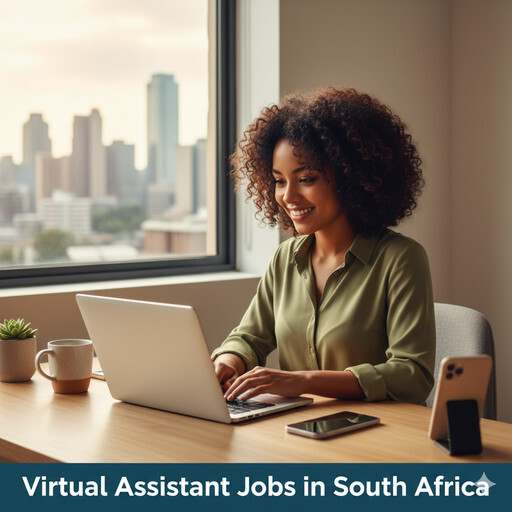
From Johannesburg to Cape Town, a digital revolution is quietly reshaping the job market—and South Africans are cashing in
If you’re tired of the 2-hour Joburg traffic nightmare, the rising cost of petrol, and the gruelling office commute, there’s a career opportunity that’s exploding in South Africa—and it’s happening right from your bedroom.
Virtual Assistant (VA) jobs are transforming how South Africans work, offering flexible income, international exposure, and the freedom to be your own boss. What was once a niche gig is now a genuine career path, and local professionals are earning serious money while working their own hours.
The Numbers Don’t Lie
South Africa’s digital economy is booming. According to recent industry reports, the demand for virtual assistants has skyrocketed by over 200% in the last three years. Platforms like Upwork, Fiverr, and PeoplePerHour are flooded with requests specifically targeting South African professionals, who are now competing globally and winning.
“The world has realised that South Africans are reliable, English-speaking, and cost-effective,” says Sarah Khumalo, a freelance VA from Pretoria who now manages businesses across three continents. “I’m earning R8,000 to R15,000 per month—sometimes more—working just 25 hours a week.”
The statistics paint an even clearer picture. Recent surveys show that 62% of South African VAs earn above R10,000 monthly within their first year, while 34% earn above R20,000. These aren’t part-time pocket money figures—these are legitimate, life-changing incomes for a country where the median salary hovers around R18,000 monthly.
What Actually Pays the Bills?
Virtual assistant roles in South Africa range far wider than just answering emails. Today’s VAs are doing:
- Email and calendar management for US and UK entrepreneurs
- Social media management for influencers and small businesses globally
- Customer service for e-commerce companies (particularly US-based)
- Data entry and administrative support for multinational corporations
- Bookkeeping and accounting coordination for remote startups
- Research and market analysis for international companies
- Content management and website updates
- Scheduling and project coordination using tools like Asana and Monday.com
The beauty? Most of these gigs don’t require a formal qualification. Reliability, good communication, and basic tech skills will get you started. Many VAs begin with zero experience and learn on the job through online courses costing between R500 and R3,000.
The Money Reality: Can You Actually Earn?
Let’s be honest—this is the question every South African job-seeker wants answered.
Entry-level VAs typically start at $5-10 per hour (roughly R90-R180). But here’s where it gets interesting: experienced VAs, especially those who specialise, can command $15-30+ per hour, with some senior positions reaching R20,000-R30,000+ monthly.
Thapelo Ndlovu from Durban built his VA business strategically. “I started at $7 an hour in 2021. By specialising in real estate administration, I now charge $22 an hour and have a waiting list. My monthly income sits between R28,000 and R35,000, and I only work 30 hours a week.”
The catch? It takes time to build your client base and reputation. Your first six months might be lean. But once you’ve got reviews and testimonials, the work flows in.
Consider this breakdown of earning potential:
Months 1-3 (Building Phase): R3,000-R6,000 monthly. You’re taking lower rates to build reviews and experience. This is expected and normal.
Months 4-8 (Growing Phase): R7,000-R12,000 monthly. You’re refining your services, attracting better clients, and raising your rates slightly.
Month 9+: R15,000-R35,000+ monthly. You’re now selective about clients, have testimonials backing you up, and command premium rates.
Some VAs skip the platforms entirely after 6-12 months and work directly with clients, keeping 100% of earnings. This is where the real money lives.
Why Companies Are Hiring South Africans
The secret is out. South African VAs offer a unique combination:
1. English Proficiency – Unlike many offshore destinations, South Africans speak fluent, accent-neutral English. US and UK businesses don’t need to repeat themselves.
2. Time Zone Sweet Spot – We’re perfectly positioned between US and Asian markets, making real-time communication feasible for businesses in multiple regions. A VA in Cape Town can start work as US businesses are finishing their day, then hand off seamlessly to Asian teams.
3. Cultural Alignment – South African work ethic and professionalism align with Western business practices, reducing friction and misunderstandings.
4. Reliability – Rightly or wrongly, South African professionals have earned a reputation for dependability in the global gig economy. We follow through on commitments.
5. Cost – At roughly one-third the cost of hiring a local VA in the US, we’re an obvious choice for bootstrapped startups and entrepreneurs scaling their operations.
The Real Talk: Challenges You’ll Face
Before you dive in, know the hurdles:
Load-shedding is a nightmare. If you lose power during a client call or while managing urgent tasks, you’re the one losing money and credibility. A backup power solution (UPS/inverter) is essential, not optional. Many VAs budget R5,000-R15,000 for a decent UPS system that keeps them online for 4-8 hours.
Internet reliability matters enormously. Jozi’s load-shedding means many VAs are switching to LTE backup or fiber connections. Budget for this—it’s not a luxury, it’s survival. A backup LTE router costs R800-R2,000 and is worth every cent.
Payment delays can happen. Most platforms hold funds for 14 days. Some clients are slow payers. You need at least two months of living expenses in reserve before starting. This isn’t optional—it’s the difference between thriving and struggling.
Isolation is real. Working solo from home isn’t for everyone. The lack of colleagues and office banter can wear on you mentally. Many VAs combat this by working from coffee shops occasionally or joining co-working spaces part-time.
Client acquisition takes effort. The first client is hardest to find. You’ll spend time building profiles, applying for jobs, pitching yourself. Expect to invest 15-20 hours in your first month just getting set up.
Competition is fierce. There are thousands of VAs globally competing for the same jobs. You need to differentiate—through specialisation, testimonials, or niche expertise.
How to Get Started (The Honest Way)
Step 1: Skill Up You don’t need a degree, but you do need skills. Invest in a VA course (many cost under R2,000). Popular platforms include Udemy, Coursera, and specialist VA training sites. Learn Google Workspace, basic bookkeeping, social media management—whatever interests you. Spend 2-3 weeks on this before launching.
Step 2: Start Where It’s Easy Platforms like Upwork and Fiverr are flooded with competition, but they’re also where clients expect new VAs. Post a competitive profile. Accept lower rates initially to build reviews. Your first 5-10 gigs are about building credibility, not maximizing income.
Step 3: Specialise Quickly General VAs earn less. Find your niche—real estate VA? E-commerce VA? Social media management? Bookkeeping specialist? Specialisation = higher rates and happier clients. Within your first three months, identify what you’re best at.
Step 4: Build Your Backup Systems UPS, fiber internet, phone hotspot backup. Unreliability = lost clients and damaged reputation. This is a business investment, not an expense.
Step 5: Think Long-Term Once you’ve built your client base (usually 3-5 solid clients), move away from platforms entirely. Offer direct services to keep 100% of your income. This is where the real money is. One R25,000/month direct client beats five R5,000 clients on a platform taking 20% commission.
The South African Success Stories
Nomusa Mthembu (Cape Town): Started as a $6/hour VA in 2020. Within two years, she built a portfolio of clients and began recruiting other VAs to work under her. Now operates her own VA agency with three staff members, earning R120,000+ monthly while handling the business side of operations.
Marcus Johnson (Sandton): Transitioned from a corporate job paying R35,000/month to freelance VA work. The first three months were terrifying—his income dropped to R8,000. But he pushed through, specialised in e-commerce support, and now earns R45,000-R55,000 while working 40% fewer hours and living in Hermanus with a better quality of life.
Lerato Sekoai (Bloemfontein): Uses VA work as a side hustle while building her personal brand as a content creator. Earns R12,000-R18,000 monthly in just 15-20 hours per week, giving her the flexibility to pursue other projects without financial stress.
Kabelo Mthembu (Pretoria): Started with zero experience, took a R1,500 VA course, and within six months was earning R16,000 monthly. Now at R28,000/month, he’s hired a junior VA and is building a small agency while still taking personal clients.
Common Mistakes New VAs Make (And How to Avoid Them)
Underpricing too aggressively. Yes, build reviews with lower rates, but don’t stay there. Raise your rates every 3-6 months. Clients who value you will stay; those who don’t weren’t meant to be yours.
Ignoring backup systems. Don’t be the VA who goes offline during load-shedding. Your reputation is everything.
Taking every job. Burnout is real. Be selective. A few high-paying clients you love beats many low-paying clients you resent.
Not tracking time properly. Use tools like Toggl or Clockify. You need data to know your actual hourly rate and profitability.
Neglecting contracts. Even informal agreements should be documented. Specify scope, rates, payment terms, and notice periods.
Is This For You?
Virtual assistant work isn’t a get-rich-quick scheme. It’s a legitimate career path that demands professionalism, time management, and hustle. You need discipline to work from home, resilience to weather the first few months, and business acumen to scale beyond trading hours for money.
But for South Africans looking to escape the office grind, earn international rates, and work flexibly, it’s genuinely life-changing. The barrier to entry is low (just a laptop and internet), the earning potential is real, and the flexibility is unmatched.
The door is open. The question is: are you ready to walk through it?
Ready to start? Begin with Upwork, Fiverr, or Fancy Hands. Set realistic expectations. Build your first three good client relationships. Then watch the opportunities multiply.
Your job isn’t on the line. Your future just got flexible.
What’s your VA journey look like? Share your experience in the comments below. Have you considered making the leap? Tell us what’s holding you back.