
Unfair Dismissal in South Africa: Know Your Rights
Fired unfairly? South African law protects you. Learn how to identify unfair dismissal, your CCMA rights, and how…
Read Article
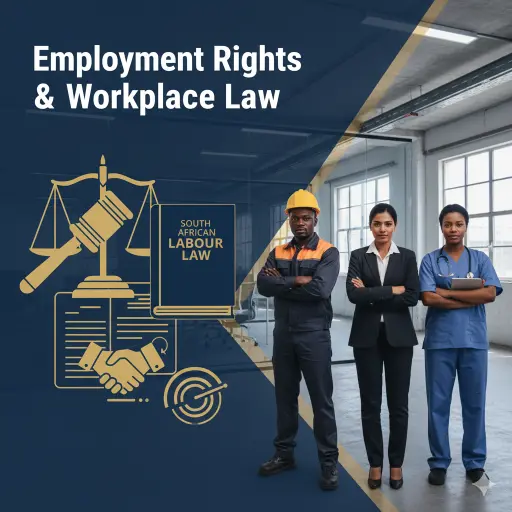
Know your employment rights, protect your livelihood, and navigate workplace challenges with confidence. Get clear, practical explanations of South African employment law—from contracts and probation periods to unfair dismissal, retrenchment, and CCMA processes.
Understand what employers can and cannot do legally, including working hours and overtime, leave entitlements (annual, sick, maternity, family responsibility), notice periods, severance pay, and grounds for dismissal. Learn when you have a valid case for the CCMA, how the dispute resolution process works, what to document when facing workplace issues, and when to seek legal advice versus handling matters yourself.
Whether you’re starting a new job and reviewing your contract, facing discrimination or harassment at work, dealing with unfair treatment or potential dismissal, navigating retrenchment, or simply want to understand your rights as an employee, our guides break down complex legal concepts into plain language relevant to real workplace situations South Africans face.
Get practical guidance on UIF claims, provident fund access, COIDs for workplace injuries, resolving disputes with employers, understanding fixed-term versus permanent contracts, and protecting yourself during probation periods. Our advice helps you distinguish between unfair treatment and actual legal violations—knowing when to stand your ground and when to walk away.
Disclaimer: The information provided in this category is for general educational purposes only and does not constitute legal advice. Employment law can be complex and fact-specific. For specific legal issues or formal disputes, we recommend consulting with a qualified labour law attorney or contacting the CCMA directly. While we strive for accuracy, employment legislation may change, and individual circumstances vary.
Don’t let employers take advantage of your lack of legal knowledge—empower yourself with the facts.
Fired unfairly? South African law protects you. Learn how to identify unfair dismissal, your CCMA rights, and how…
Read ArticleWaiting to be noticed won't get you promoted. Here's the exact step-by-step strategy South African professionals need to…
Read ArticleKnow your sick leave rights in SA! Learn how many days you're entitled to, when your boss can…
Read ArticlePregnant and unsure of your rights at work? Discover everything about maternity leave, UIF benefits, and job protection…
Read ArticlePreparing for a remote job interview in South Africa? Learn how to handle load shedding, impress international employers,…
Read ArticleEssential guide to retrenchment rights in SA. Understand consultation processes, severance pay, and how to protect your interests…
Read ArticleNavigate workplace disputes effectively with our comprehensive CCMA process guide. Protect your employment rights and achieve fair resolution…
Read ArticleEssential guide to workplace harassment rights in SA. Understand your legal protections, available remedies, and practical steps to…
Read ArticleYour complete guide to mental health rights and coping strategies in South African workplaces. Protect your wellbeing while…
Read ArticleBasic Conditions of Employment legislation requires that workers get a minimum of 21 consecutive days of annual leave…
Read Article Job hunting? WhatsApp us