

Security is one of the largest ongoing employers of first-time job seekers in South Africa, but it comes with a legal requirement that other entry-level industries don’t have: you cannot work as a security officer without being registered with PSIRA, the Private Security Industry Regulatory Authority. This page explains exactly what PSIRA is, how the grading system works, and what the registration process actually involves, so you know precisely what’s required before you start applying for security roles.
For a wider view of other accessible entry-level roles, see No-Experience Jobs That Actually Exist in South Africa.
What Is PSIRA?
PSIRA is the statutory body that regulates the private security industry in South Africa. Its role is to register and monitor everyone working in private security — from security officers on the ground to the companies that employ them — to ensure a minimum standard of training, conduct, and accountability across the industry. Registration with PSIRA is a legal requirement, not an optional credential: it is illegal to work as a security officer in South Africa without being registered, and legitimate employers will not place you on duty without proof of registration.
The PSIRA Grading System
Security officers are classified into grades, from Grade E (entry-level) through to Grade A (senior/supervisory), each corresponding to a different level of training, responsibility, and minimum pay rate:
- Grade E and D — entry-level grades, typically for general guarding duties, access control, and basic patrol work. Most first-time applicants to the security industry start here.
- Grade C — an intermediate grade, often associated with slightly more responsibility or specialised posts (such as certain armed response or higher-risk sites, depending on additional training).
- Grade B — typically supervisory-level positions, overseeing teams of more junior officers.
- Grade A — the most senior grade, generally associated with site management or higher-level security operations roles.
Each grade has an associated minimum wage set by the relevant sectoral determination for the security industry, meaning pay is more standardised in this industry than in many other entry-level categories — see our entry-level salary guide for broader context on how security pay compares to other entry-level categories.
How PSIRA Registration Works
Broadly, the registration process involves the following steps. Because requirements and fees can be updated by PSIRA from time to time, always confirm the current process directly on PSIRA’s official channels before starting, rather than relying solely on secondary sources.
- Meet the basic eligibility requirements — you generally need to be a South African citizen or hold valid legal working status, be of a minimum age, and have no disqualifying criminal record (certain convictions, particularly involving violence or dishonesty, can disqualify you).
- Complete the required training — Grade E and D training (the entry-level grades) is provided by PSIRA-accredited training providers and covers the basics of security work, relevant law, and conduct standards. This training is a prerequisite for registration at that grade.
- Submit your application to PSIRA — this includes your ID, proof of training, and the relevant application fee, along with any other documentation PSIRA specifies at the time of application.
- Undergo the required vetting — including a criminal record check as part of the registration process.
- Receive your PSIRA registration certificate — once approved, this certificate is what confirms you’re legally permitted to work as a security officer at your registered grade, and employers will ask to see it before placing you on duty.
The process takes time — it is not instant — so if you’re planning to move into security work, it’s worth starting the training and registration process well before you need the income, rather than assuming you can register and start working within days.
Choosing a Training Provider
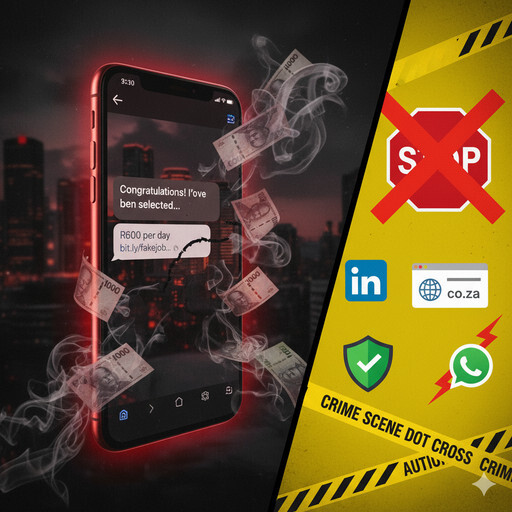
Only training completed through a PSIRA-accredited provider counts toward registration. Before paying for any security training course, confirm the provider’s accreditation status directly rather than taking their word for it — this protects you from wasting money on training that won’t actually lead to valid registration. Be similarly cautious of any provider or “recruiter” promising guaranteed placement or charging unusually high upfront fees beyond the standard training and registration costs; this is a pattern worth treating carefully, and we cover exactly this kind of red flag in How to Spot Fake “No Experience, Easy Money” Job Scams.
What Security Work Actually Involves
Entry-level security roles typically involve access control, patrolling, monitoring CCTV, and general site protection at commercial premises, residential estates, retail centres, or events. Shift work — including nights, weekends, and public holidays — is standard, and the role requires sustained alertness, the ability to stay calm under pressure, and clear communication, particularly when dealing with incidents or unauthorised access attempts.
After You’re Registered
Once registered, security companies and, in some cases, direct employers hire Grade E and D officers on an ongoing basis, since staff turnover and site coverage needs mean demand is fairly consistent. You can browse current security and other entry-level vacancies on our entry-level jobs listings page. Building experience and, where relevant, further training can open the way toward higher grades and supervisory roles over time.
Frequently Asked Questions
Can I work as a security guard without PSIRA registration?
No. PSIRA registration is a legal requirement to work as a security officer in South Africa, and legitimate employers will require proof of valid registration before placing you on duty.
How long does PSIRA registration take?
Timelines can vary, and PSIRA is the authoritative source for current processing times — it is not an instant process, so plan to start well ahead of when you need to be working, and confirm current timelines directly with PSIRA or your training provider.
Does a criminal record automatically disqualify me from PSIRA registration?
Not necessarily — it depends on the nature of the offence. Certain convictions, particularly those involving violence or dishonesty, are more likely to be disqualifying. If you’re unsure how your specific record might affect your application, PSIRA is the appropriate authority to confirm this with directly.



Leave a Reply