
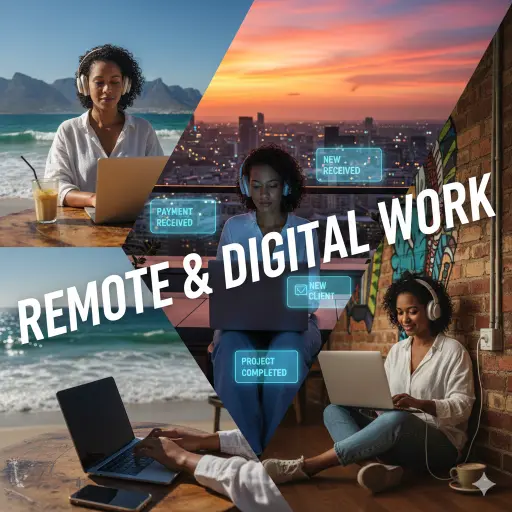
This guide walks you through exactly how to break into freelance writing in South Africa, where to find clients, what to charge, and how to grow a sustainable income — even if you’ve never been paid to write a single word before.
Why Freelance Writing Is a Legit Career Path in South Africa
Let’s be honest — when most South Africans hear “freelance writing,” they assume it’s a side hobby that pays peanuts. That couldn’t be further from the truth. Skilled freelance writers in South Africa are earning anywhere from R8,000 to R60,000+ per month, depending on their niche, client base, and experience level.
With load shedding, rising fuel costs, and a tough job market, more South Africans are looking for flexible, location-independent income. Freelance writing ticks every box. You work when you want, from where you want, and — if you play your cards right — for clients who pay in US dollars, British pounds, or euros.
The demand for quality written content has never been higher. Every business with a website needs blog posts, product descriptions, email newsletters, and social media copy. That demand doesn’t disappear — it grows every year.
What Types of Freelance Writing Can You Do?
Freelance writing isn’t just one thing. There are dozens of specialisations, and finding your niche is one of the fastest ways to increase your earning potential. Here are the most in-demand types:
Content Writing and Blogging
This is where most beginners start. Content writers create articles, blog posts, and guides for businesses looking to attract traffic through Google. If you can write clearly and follow SEO basics, you can absolutely get paid for this. Rates typically range from R0.50 to R3.00 per word for local clients, and USD $0.05 to $0.30 per word for international clients.
Copywriting
Copywriting is the art of writing words that sell. Think website landing pages, email campaigns, product descriptions, and advertisements. Copywriters generally earn more than content writers because their work is directly tied to revenue. A solid sales page can earn a freelance copywriter R5,000 to R20,000 for a single project.
Technical Writing
If you have a background in IT, engineering, finance, or healthcare, technical writing can be incredibly lucrative. You’ll write user manuals, software documentation, white papers, and how-to guides for specialist audiences. South Africa has a shortage of skilled technical writers, which means strong demand and premium rates.
SEO Writing
SEO (Search Engine Optimisation) writing combines content creation with keyword strategy. Businesses hire SEO writers to help their websites rank higher on Google. This is one of the most consistently in-demand forms of freelance writing, especially from international clients running digital marketing agencies.
Social Media Writing
Short-form content for Facebook, Instagram, LinkedIn, and X (formerly Twitter) is a growing market. Many small business owners in South Africa know they need a social media presence but don’t have the time or skill to write engaging posts consistently. That’s your opportunity.
Ghostwriting
Ghostwriting means writing content that someone else publishes under their own name. This includes books, articles, speeches, and LinkedIn thought-leadership posts. It pays well and there’s more demand than most people realise — especially from busy executives and entrepreneurs.
How to Get Started With Zero Experience
Here’s the honest truth: everyone starts with zero experience. The difference between those who make it and those who don’t is simply taking action. Here’s a practical step-by-step approach:
Step 1: Pick a Niche (or Two)
Don’t try to write about everything. Clients pay more for specialists. Think about what you already know — your professional background, hobbies, or areas you’re passionate about. A former nurse who writes health content, or an accountant who writes finance articles, will earn significantly more than a generalist from day one.
Popular niches for South African freelance writers include: personal finance, travel, real estate, technology, health and wellness, legal content, and business/entrepreneurship.
Step 2: Build a Writing Portfolio
You need writing samples before clients will hire you. Start a free blog on platforms like WordPress or Medium and write 3–5 polished articles in your chosen niche. These become your portfolio pieces. Don’t wait until they’re perfect — done is better than perfect when you’re starting out.
Alternatively, contribute guest posts to South African websites in your industry. Sites like BusinessTech, Daily Maverick, and various industry blogs often accept contributor content. Even unpaid bylines can demonstrate your writing ability to future clients.
Step 3: Create a Simple Online Presence
You don’t need an elaborate website to start. A clean, professional LinkedIn profile with writing samples linked, or a basic portfolio site on platforms like Journo Portfolio or Clippings.me, is enough to get you moving. Make sure your bio clearly states what you write about and who you write for.
Step 4: Start Pitching Clients
This is where most aspiring freelancers stall. Pitching feels uncomfortable — but it gets easier with practice. Start with warm outreach: contact local South African businesses in your niche directly via email or LinkedIn. A personalised, professional pitch explaining how your writing can help their business will get more responses than any platform profile.
Where to Find Freelance Writing Jobs in South Africa
There are multiple avenues to find paying clients, from local platforms to international marketplaces. Here’s where to look:
International Freelance Platforms
- Upwork: The largest freelance platform globally. Competition is high but so is the opportunity. Build your profile carefully, start with competitive rates, and gather reviews. Many South African writers earn USD $25–$75 per hour on Upwork once established.
- Fiverr: Great for creating specific writing packages (“gigs”). You set fixed prices for defined deliverables. Works well for content writing, product descriptions, and social media copy.
- ProBlogger Job Board: A well-respected job board specifically for blogging and content writing jobs. Many listings come from US and UK businesses paying international rates.
- Contena and Scripted: Curated platforms that vet both clients and writers. Harder to get into but offers higher quality work and better rates.
- LinkedIn Jobs: Many digital marketing agencies and content companies post remote writing jobs here. Set up job alerts for “content writer remote” or “copywriter remote.”
Local South African Opportunities
- South African digital marketing agencies: Companies like Nfinity, Quirk (now part of WPP), and dozens of smaller agencies regularly hire freelance writers for client content.
- Local publications: Magazines like Destiny, Entrepreneur SA, and various online news platforms pay for contributed articles.
- Small businesses and startups: Cold outreach to local businesses in your niche can be highly effective. A Johannesburg-based property company that needs consistent blog content, or a Cape Town restaurant group that needs email copy, are both realistic prospects.
What to Charge as a South African Freelance Writer
Pricing is where many new writers undercharge dramatically — and it hurts them in the long run. Here’s a realistic guide to rates in 2026:
Local (Rand-Based) Clients
- Blog post (500–800 words): R500 – R1,500
- Blog post (1,000–1,500 words): R1,200 – R3,000
- Website copywriting (per page): R1,500 – R5,000
- Email newsletter: R800 – R2,500
- Social media package (monthly): R2,000 – R8,000
International (USD/GBP/EUR) Clients
- Blog post (1,000 words): $50 – $300
- Long-form article (2,000+ words): $150 – $600
- Website copy (per page): $100 – $500
- Email sequence (5 emails): $250 – $1,000
- Ghostwriting (per book chapter): $500 – $2,000
With the rand/dollar exchange rate, even mid-range international rates translate to excellent local income. A writer earning just $1,500 per month from international clients brings in approximately R27,000–R30,000 at current exchange rates — and that figure only grows as you build experience.
Tools Every South African Freelance Writer Needs
You don’t need expensive software to run a successful freelance writing business. Here are the essentials:
- Google Docs: Free, collaborative, and the industry standard for sharing drafts with clients.
- Grammarly: Catch grammar errors and improve clarity before submitting work. The free version covers the basics; the premium plan is worth it once you’re earning.
- Hemingway Editor: Helps you simplify complex sentences and improve readability — essential for content writing.
- Trello or Notion: Manage multiple client projects, deadlines, and content briefs without things falling through the cracks.
- PayPal or Payoneer: Essential for receiving international payments. Payoneer is particularly popular among South African freelancers as it integrates well with local bank accounts.
- Wave Accounting: Free invoicing and basic bookkeeping software — perfect for tracking income and expenses when it’s tax season.
Common Mistakes New Freelance Writers Make
Learning from others’ mistakes will save you months of frustration. Here are the biggest pitfalls to avoid:
Undercharging Out of Desperation
New writers often accept extremely low rates just to get their first client. While building a portfolio matters, working for R50 per article trains clients to undervalue you — and trains you to undervalue yourself. Know your floor rate and hold to it.
Skipping the Contract
Always use a written contract or at minimum a detailed email agreement. Specify word count, revision rounds, payment terms, and deadlines. South Africa has freelancers who’ve done weeks of work and never been paid because there was no written agreement. Protect yourself.
Relying on One Client
If one client makes up 80% of your income, you’re one email away from financial stress. Diversify your client base from the beginning. Aim to have at least 3–5 active clients at any given time.
Ignoring the Business Side
Freelance writing is a business. Register as a sole proprietor with CIPC if you’re earning consistently, keep records of all income and expenses, and pay your provisional taxes. The South African Revenue Service (SARS) expects freelancers to declare their income — don’t let tax season catch you off guard.
Scaling From Freelance Writer to Content Business
Once you’ve established a consistent client base, you can start thinking bigger. Many successful South African freelancers have scaled their writing work into full content agencies, hiring other writers to handle volume while they focus on client relationships and strategy.
Others specialise deeply — becoming the go-to expert for a specific industry like fintech, legal, or property — and command premium rates as a result. Some pivot into content strategy consulting, helping businesses plan and manage their entire content approach, not just writing individual pieces.
The ceiling for a skilled, business-minded freelance writer in South Africa is genuinely high. The writers who treat it seriously — who invest in their skills, deliver consistently, and manage their client relationships professionally — build careers that outpace most traditional employment.
Final Thoughts: Is Freelance Writing Right for You?
Freelance writing isn’t a get-rich-quick scheme. It takes effort to build momentum, and the first few months can feel slow. But for South Africans who enjoy writing, want flexibility, and are willing to treat it like a proper business, the rewards are very real.
You can start today — literally. Write your first sample article this evening. Create a LinkedIn profile this weekend. Send your first pitch email next week. The writers earning R30,000+ per month from home didn’t start there — they started exactly where you are now.
The digital economy doesn’t care where you live, what university you attended, or whether you have years of corporate experience. It cares about whether your words deliver value. If you can do that, you have a career waiting for you.





Leave a Reply