
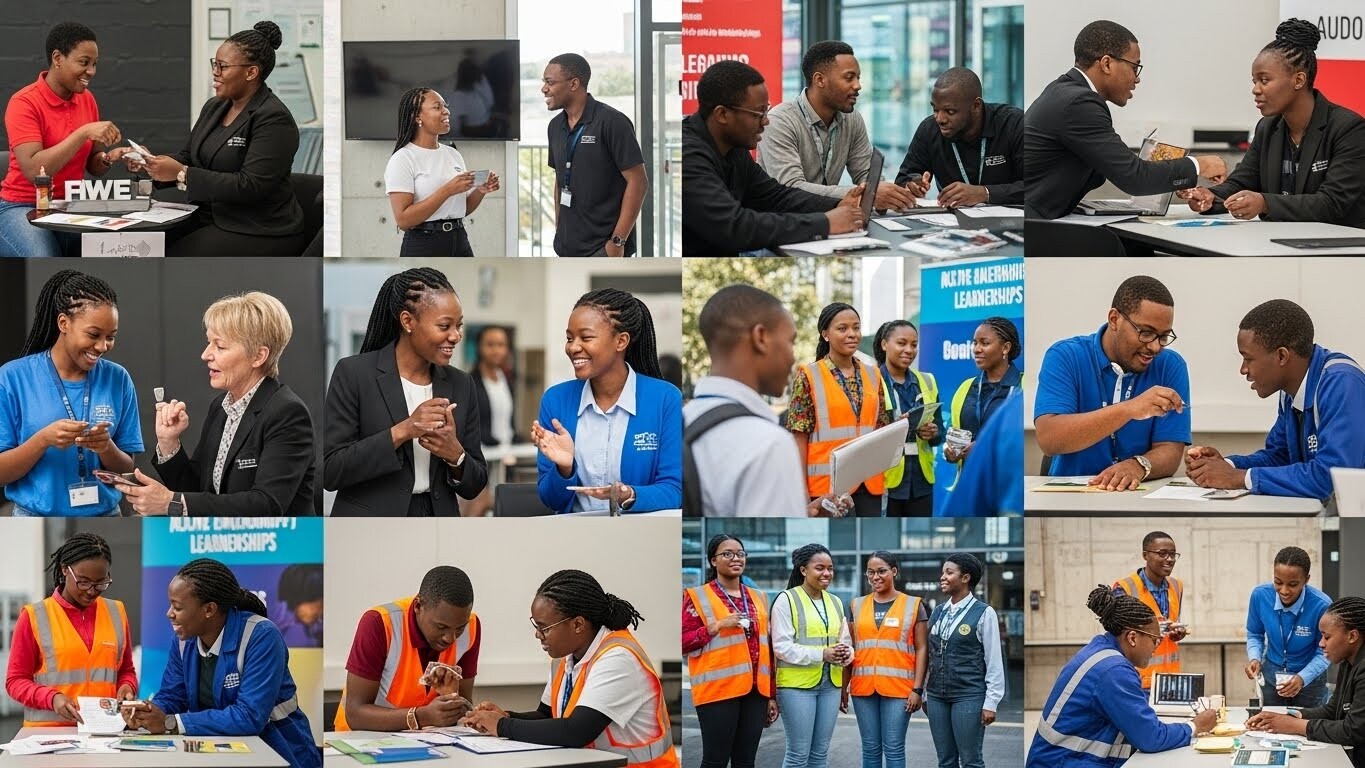
Alongside general academic and need-based bursaries, a significant number of South African funders run programmes specifically aimed at increasing access for groups that remain underrepresented in certain fields or in higher education more broadly. These bursaries exist because funders, particularly in male-dominated fields like engineering and IT, or in response to broader access barriers linked to disability, actively want to diversify who they’re funding, not just who applies. If you fall into one of these categories, it’s worth actively seeking these programmes out specifically, since they’re sometimes less well advertised than large general bursary schemes.
Bursaries for Women
Women remain underrepresented in several high-demand bursary fields, particularly engineering, IT, and the physical sciences, and a number of funders run bursary streams or set-aside quotas specifically to address this. These are especially common among engineering firms, mining companies, and technology employers, who often frame these bursaries as part of a broader transformation and diversity strategy within their industry. If you’re pursuing a field like engineering or IT, it’s worth checking whether your target funders run a specific women-in-[field] stream alongside their general bursary, since this can sometimes mean a separate, less competitive applicant pool than the general programme. See our guides to engineering bursaries and IT and technology bursaries for the broader funding landscape in these fields.
Bursaries for Students with Disabilities
A number of bursaries in South Africa are specifically designed for students with disabilities, recognising that additional costs, such as assistive technology, specialised transport, or adapted study materials, can make funding gaps more significant for these students even where general bursary or NSFAS support is available. Some of these bursaries are run by disability-focused trusts and non-profit organisations, while others are set-aside categories within larger corporate or government bursary schemes.
NSFAS itself makes specific provision for students with disabilities, including additional allowances to cover disability-related study costs beyond the standard funding package. If you have a disability and are applying for NSFAS, it’s worth ensuring your application clearly includes the relevant supporting documentation, such as a medical or psychological assessment confirming your specific disability, since this can affect both your eligibility and the funding package you’re assessed for. See our full NSFAS guide for the general eligibility and application process this sits within.
Bursaries for Other Underrepresented Groups
Beyond gender and disability, some private trusts and corporate funders run bursary programmes targeted at specific communities, such as students from rural or historically underserved areas, first-generation university students, or students connected to a specific region where the funder operates. These tend to be smaller and more localised than national schemes, which means they’re often less competitive but also less widely known, so they’re worth actively researching rather than assuming they don’t exist for your specific situation.
Requirements for These Bursaries
Requirements vary by programme, but most combine the standard academic and financial criteria used across general bursaries with an additional eligibility criterion specific to the target group, such as confirmation of disability status, gender, or a documented connection to a specific community or region. See our full guide to bursary requirements in South Africa for the general criteria that apply across most bursary types, which these programmes generally build on rather than replace entirely.
Where to Find These Bursaries
Because these programmes are sometimes run as a smaller stream within a larger corporate or government bursary, rather than advertised as fully standalone opportunities, it’s worth reading the full terms of general bursaries in your field closely, since a women-in-engineering or disability-inclusive stream may not always be prominent in a funder’s main marketing. Disability-focused and community-specific trusts are also worth searching for directly by name where you’re aware of organisations working in this space.
You can browse current bursary opportunities, including those targeted at specific groups, on our bursaries and scholarships listings page. Once you’ve identified a suitable bursary, our step-by-step guide to applying for a bursary and bursary application documents checklist cover the general process and documentation these programmes typically require.
This page is part of our complete guide to bursaries in South Africa. Read the full pillar guide here.
Frequently Asked Questions
Do bursaries for women require proof of gender?
Most rely on standard application documentation such as your ID, which reflects your legal gender, rather than requiring separate specific proof beyond what’s already part of a standard bursary application.
What documentation do I need for a disability bursary?
Most funders require a medical or psychological assessment confirming your specific disability, alongside the standard documents required for any bursary application. See our full bursary application documents checklist for the general requirements this builds on.
Are these bursaries less competitive than general bursaries?
Often, yes, since the applicant pool is smaller by definition, though this varies significantly by specific programme and field. They’re generally worth applying to alongside, rather than instead of, general bursaries in your field.




Leave a Reply