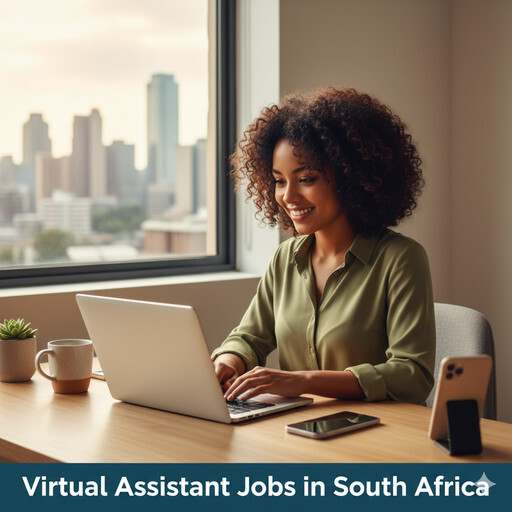
The landscape of work in South Africa has undergone a seismic shift. What was once considered a luxury reserved for freelancers and digital nomads has become a mainstream reality for hundreds of thousands of South Africans. Remote jobs in South Africa are no longer the exception—they’re rapidly becoming the rule, and they’re transforming how we think about employment, lifestyle, and opportunity in the Rainbow Nation.
Whether you’re a professional in Johannesburg tired of the daily commute along the N1, a talented developer in Cape Town seeking international opportunities, or a skilled worker in a smaller city looking to access opportunities previously locked behind geographic barriers, remote work has opened doors that were firmly shut just a few years ago.
The Remote Work Revolution in South Africa
South Africa’s remote work revolution didn’t happen overnight. While the global pandemic of 2020 certainly accelerated the trend, the groundwork had been laid for years. Our country’s unique position—bridging time zones between Europe and Asia, offering a cost-competitive workforce with strong English proficiency, and boasting world-class talent in technology, finance, and creative industries—made us perfectly positioned to capitalize on the remote work boom.
Today, South Africa is home to a thriving remote work ecosystem. From software developers earning international salaries while living in the Garden Route, to customer service professionals providing support to UK companies from their homes in Pretoria, to accountants managing books for Australian firms while enjoying the Durban coastline, remote jobs have fundamentally changed what’s possible for South African workers.
The numbers tell a compelling story. Recent surveys indicate that over 35% of South African professionals now work remotely at least part of the time, with that number climbing steadily year over year. Industries that once demanded in-office presence—banking, insurance, legal services—have discovered that remote work not only functions but often improves productivity and employee satisfaction.
Why Remote Jobs Are Perfect for South Africans
South Africa faces unique challenges that make remote work particularly attractive. Load shedding, while improving, remains a concern for many businesses. Remote work allows companies to distribute their workforce, reducing the impact of power outages on operations. When Stage 4 hits in one area, employees in other regions can pick up the slack.
Our geographic diversity is another advantage. South Africa is vast, and opportunity has historically been concentrated in major metros like Johannesburg, Cape Town, Durban, and Pretoria. Remote jobs democratize access to these opportunities. A brilliant software developer in Port Elizabeth no longer needs to relocate to Sandton to access top-tier opportunities. A marketing professional in Polokwane can work for a Cape Town agency without leaving their community.
The cost of living disparities across South Africa also make remote work attractive. Earning a Johannesburg salary while living in more affordable cities like Bloemfontein, East London, or Nelspruit can dramatically improve quality of life. Your rand stretches further, housing is more affordable, and you can often enjoy a slower pace of life without sacrificing career growth.
For many South Africans, remote work also means access to international opportunities. With the rand’s ongoing volatility, earning in dollars, pounds, or euros while living in South Africa can be life-changing. A developer earning $50,000 USD annually is bringing home significantly more purchasing power than their office-bound counterpart earning a local salary.
The Most In-Demand Remote Jobs in South Africa
Technology and Software Development
Software development remains the crown jewel of remote work in South Africa. Our developers are highly regarded internationally, and the time zone overlap with Europe makes South African tech talent particularly attractive to European companies. Whether you’re a full-stack developer, mobile app specialist, DevOps engineer, or data scientist, remote opportunities abound.
Companies from Silicon Valley to Stockholm are hiring South African developers, and the pay is competitive. It’s not uncommon for senior developers to earn R1.2 million to R2 million+ annually working remotely for international firms—figures that would have been unthinkable a decade ago for someone living in South Africa.
Front-end developers specializing in React, Vue, or Angular are in particularly high demand, as are back-end developers with expertise in Python, Node.js, and cloud technologies like AWS and Azure. If you’re considering entering the tech field, these skills open doors to remote opportunities globally.
Digital Marketing and SEO Specialists
Digital marketing has become one of the most accessible entry points into remote work. South African marketers are managing social media accounts for New York restaurants, running Google Ads campaigns for London retailers, and developing SEO strategies for Australian e-commerce stores—all from home offices in South Africa.
The beauty of digital marketing is its relatively low barrier to entry. While formal education helps, many successful remote digital marketers are self-taught, having built their expertise through online courses, certifications, and hands-on experience. Skills in SEO, content marketing, email marketing, and paid advertising are consistently in demand.
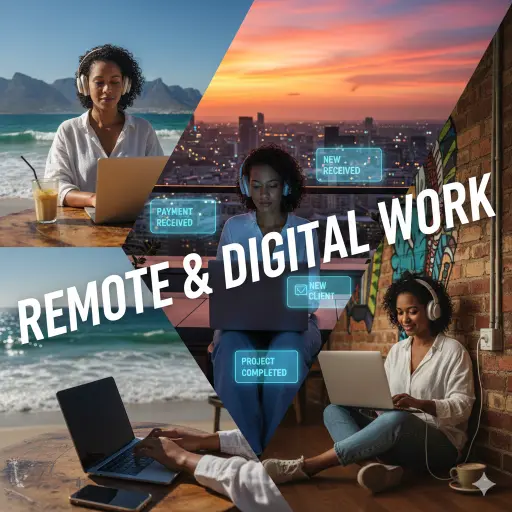
For those interested in exploring digital work opportunities further, understanding the remote and digital work landscape is essential for navigating this growing field.
Customer Service and Support
Customer service representatives are in constant demand for remote positions. As businesses operate globally, they need support staff across different time zones. South Africa’s time zone (GMT+2) is ideal for serving European markets during their business hours and extending coverage for US East Coast companies.
The pay varies widely—entry-level positions might start around R8,000-R12,000 monthly, while specialized technical support roles can command R25,000+ per month. Many companies offer these positions on a part-time or flexible schedule basis, making them ideal for parents, students, or those seeking supplementary income.
Language skills are your biggest asset here. If you’re fluent in languages beyond English—Afrikaans, Portuguese, French, or German—you become exponentially more valuable to international companies seeking multilingual support staff.
Writing, Content Creation, and Copywriting
Content is the currency of the internet, and businesses need quality writing constantly. South African writers, journalists, and content creators are finding abundant remote opportunities in content marketing, copywriting, technical writing, and journalism.
Freelance platforms like Upwork and Fiverr have South African writers earning anywhere from R15,000 to R50,000+ monthly, depending on specialization and client base. Those who develop expertise in technical niches—fintech, healthcare, SaaS, legal—command premium rates.
Beyond traditional writing, content creation has expanded to include video scripts, podcast scripts, social media content, and email sequences. The diversification of content types means more opportunities for creative professionals.
Accounting and Finance
South Africa’s strong financial services sector has produced world-class accountants and financial professionals. These skills translate beautifully to remote work. Bookkeepers, financial analysts, tax specialists, and management accountants are finding remote positions with both South African and international companies.
Remote finance roles often pay well—qualified accountants with CA(SA) or CIMA qualifications working remotely for international firms can earn R600,000 to R1.2 million+ annually. Even entry-level bookkeepers can find remote positions paying R15,000-R25,000 monthly.
Cloud-based accounting software like Xero, QuickBooks, and Sage Business Cloud has made remote financial work seamless. If you’re in finance and haven’t yet familiarized yourself with these platforms, doing so opens significant remote opportunities.
Virtual Assistance and Administrative Work
Virtual assistants (VAs) are the backbone of many small businesses and entrepreneurs worldwide. South African VAs are managing calendars, booking travel, handling correspondence, and managing projects for clients across the globe.
The role is diverse—you might handle email management one hour and social media scheduling the next. The pay typically ranges from R8,000 to R30,000 monthly, depending on experience and specialization. Executive VAs supporting C-suite executives or handling complex project management can earn significantly more.
The VA role is also an excellent entry point into remote work. It requires organization, communication skills, and reliability more than specific technical expertise, making it accessible to career changers or those entering the workforce.
Design and Creative Services
Graphic designers, UI/UX designers, video editors, and other creative professionals are thriving in South Africa’s remote economy. International companies value South African creativity and design sensibility, particularly given our multicultural perspective and aesthetic diversity.
Design tools like Figma, Adobe Creative Cloud, and Canva have made remote collaboration seamless. Designers can work with clients in real-time, sharing screens and collaborating on projects despite being thousands of kilometers apart.
Pay varies dramatically based on specialization. A UI/UX designer working for a Silicon Valley startup might earn R800,000+ annually, while a freelance graphic designer might earn R20,000-R60,000 monthly depending on client base and project volume.
Education and Online Tutoring
Teaching English online became hugely popular in South Africa, though that market has evolved significantly. However, online education extends far beyond ESL. South African educators are teaching mathematics, science, coding, music, and countless other subjects to students globally.
Platforms like Preply, Cambly, and specialized tutoring services connect South African educators with students worldwide. Rates vary—English tutors might earn R100-R250 per hour, while specialized subjects like advanced mathematics or programming can command R300-R600+ per hour.
The beauty of online tutoring is flexibility. Many tutors work around their schedules, taking students during early mornings, evenings, or weekends to accommodate different time zones and maximize their earning potential.
Finding Legitimate Remote Jobs in South Africa
The abundance of remote opportunities has unfortunately attracted scammers. Knowing where to look and how to identify legitimate opportunities is crucial.
Reputable South African Job Boards
Start with established South African job boards that have adapted to the remote work era. Sites like JobsSouthAfrica.co.za feature verified remote positions from reputable companies. Look for positions clearly marked as “remote” or “work from home” and verify the company’s legitimacy before applying.
CareerJunction, Pnet, and Indeed South Africa also feature remote positions, though you’ll need to filter carefully and research companies thoroughly. LinkedIn has become particularly valuable—many remote positions are posted directly by hiring managers, allowing you to connect with companies authentically.
International Remote Job Platforms
Don’t limit yourself to South African sites. Platforms like Remote.co, We Work Remotely, FlexJobs, and Remote OK feature international companies hiring globally. While competition is global, so is opportunity. South African professionals regularly secure positions on these platforms.
When applying to international positions, highlight advantages you bring—time zone compatibility with Europe, strong English skills, competitive rates, and relevant experience. Many international companies actively seek South African talent.
Freelance Platforms
Upwork, Fiverr, Toptal, and Freelancer.com connect South African professionals with clients worldwide. Building a strong profile, collecting positive reviews, and specializing in a niche helps you stand out. While these platforms take a commission, they provide payment protection and steady client flow.
Start by building your profile meticulously—showcase your best work, write a compelling bio, and price competitively initially to build reviews. Once established, you can increase rates and be selective about projects.
Company Career Pages
Many progressive South African companies now offer remote positions—companies like Takealot, BrandsEye, and numerous tech startups. Meanwhile, international companies with South African operations like Amazon, Microsoft, and Google occasionally offer remote positions to South African residents.
Bookmark career pages of companies you’d like to work for and check regularly. Set up Google Alerts for “[Company name] remote jobs South Africa” to get notified when new positions appear.
Networking and Community
Remote work communities on Facebook, Slack, and Discord often share opportunities before they’re publicly advertised. Groups like “Remote Work South Africa,” “Digital Nomads South Africa,” and industry-specific communities are valuable resources.
Networking matters in remote work just as it does in traditional employment. Engaging in online communities, contributing value, and building genuine relationships often leads to opportunities that never appear on job boards.
Essential Skills for Remote Work Success
Landing a remote job requires more than professional skills—you need a specific skill set that makes you effective in a distributed environment.
Communication Skills
In remote work, communication is everything. Without casual office conversations or body language cues, you must communicate clearly, concisely, and proactively. This means writing clear emails, providing thorough updates, asking clarifying questions, and being responsive.
Companies hiring remotely often prioritize communication skills over technical skills because poor communication creates cascading problems in remote teams. If you’re naturally introverted or struggle with written communication, consider this an area for development before pursuing remote opportunities.
Self-Discipline and Time Management
Remote work requires exceptional self-management. Without a manager physically present or colleagues around you working, you must generate your own structure and accountability. This means setting a schedule, creating boundaries between work and personal time, and maintaining productivity without external oversight.
Tools like time-blocking, the Pomodoro Technique, and project management apps (Trello, Asana, Notion) help maintain structure. The most successful remote workers treat their home office like an office—establishing routines, taking breaks, and maintaining professional standards even when alone.
Technical Proficiency
Basic technical competence is non-negotiable. You need reliable familiarity with video conferencing (Zoom, Google Meet, Microsoft Teams), collaboration tools (Slack, Microsoft Teams), project management software, and cloud storage (Google Drive, Dropbox, OneDrive).
Troubleshooting basic technical issues independently is also crucial. When your internet drops or your software crashes, you can’t call IT—you need to solve it yourself. Building comfort with technology reduces stress and improves your effectiveness.
Adaptability and Problem-Solving
Remote work environments change constantly. Companies adopt new tools, processes evolve, and teams restructure. The ability to adapt quickly, learn new systems, and solve problems independently makes you invaluable.
When obstacles arise—and they will—remote workers who can identify solutions rather than waiting for answers stand out. Cultivate resourcefulness and initiative.
Setting Up Your Home Office for Success
Your workspace dramatically impacts your success in remote work. While you don’t need an expensive setup, certain investments pay dividends.
Internet Connectivity
Reliable internet is your lifeline. For most remote jobs, you need at least 10 Mbps download and 5 Mbps upload speeds, though higher is better for video calls and file transfers. Consider upgrading your package if necessary—it’s a business expense that justifies itself.
Given South Africa’s load shedding challenges, having a backup internet solution is wise. Options include:
- Mobile hotspot via your phone
- Secondary fiber provider through a different network
- LTE backup router
- Coworking space membership for emergency use
Some remote workers invest in UPS systems or inverters to keep routers running during outages, ensuring connectivity even when power is out.
Ergonomic Workspace
Working from your couch seems appealing until back pain sets in. A proper desk and ergonomic chair are essential investments. You don’t need expensive furniture—affordable options exist—but you need proper support.
Position your screen at eye level to avoid neck strain. Your elbows should be at 90 degrees when typing. Take regular breaks to stand, stretch, and move. Remote workers often underestimate the physical toll of prolonged sitting without the natural movement that office environments encourage.
Video Call Setup
Professional video calls require decent lighting and a clean background. Natural light from a window facing you works beautifully, though avoid backlighting (window behind you). For evening calls, a simple ring light or desk lamp improves your appearance significantly.
Your background matters. A blank wall, bookshelf, or tidy room presents professionally. Virtual backgrounds work but can look unprofessional if your internet connection causes glitching. Keep your space neutral and distraction-free.
Software and Tools
Beyond basic hardware, certain software enhances remote work effectiveness:
- Password manager (LastPass, 1Password): Securely manage credentials for numerous accounts
- VPN service: Protect your data and access geo-restricted resources
- Time tracking: Toggle Track or Clockify help monitor productivity and billable hours
- Note-taking: Notion, Evernote, or OneNote keep information organized
- Communication: Ensure you’re comfortable with Zoom, Google Meet, and Slack
Many remote jobs provide necessary software, but having your own tools demonstrates professionalism and preparedness.
Overcoming Common Remote Work Challenges in South Africa
Remote work isn’t without challenges, particularly in the South African context. Understanding and preparing for these obstacles increases your success likelihood.
Load Shedding
Load shedding remains the elephant in the room for South African remote workers. While Eskom’s performance has improved, preparedness remains essential.
Successful strategies include:
- Transparent communication: Inform employers upfront about potential power issues and your backup plans
- Schedule awareness: Plan deep work during low load shedding stages and schedule administrative tasks during high-risk periods
- Mobile hotspot setup: Ensure your phone plan supports hotspot usage with sufficient data
- Battery bank: Keep laptops charged and invest in battery banks for routers and devices
- Coworking membership: Have a backup location with generators and stable internet
Many South African companies understand load shedding challenges. International companies might need education about the situation, but presenting solutions alongside the problem demonstrates professionalism.
Time Zone Challenges
Working for international companies means navigating time zones. A UK company expects availability during their business hours, which might mean starting your day at 8 AM SAST (7 AM GMT+1 during winter). US West Coast companies might need evening availability.
Consider your lifestyle and preferences. Early birds might love European companies, while night owls excel with American clients. Some remote workers split schedules—working morning hours for one client and evening hours for another—though this requires careful boundary management to avoid burnout.
Isolation and Loneliness
Remote work can be isolating, particularly for extroverts who thrive on social interaction. The absence of water cooler conversations, lunch outings, and casual colleague interactions affects mental health.
Combat isolation through:
- Coworking spaces: Even occasional coworking provides social interaction and structure
- Remote work meetups: Join local remote worker communities for coffee or networking
- Virtual socializing: Participate in company social events via video
- Regular breaks: Use breaks for calls with friends or short outings
- Clear boundaries: Separate work and personal time to ensure you have social life
Remember that remote work doesn’t mean working alone from home exclusively. Coffee shops, libraries, coworking spaces, and even parks (with good phone hotspot) provide environment changes.
Career Development Concerns
Some professionals worry remote work limits career advancement—the “out of sight, out of mind” concern. While valid in poorly managed companies, progressive organizations evaluate performance based on results, not presence.
Proactively manage your career development:
- Document achievements: Keep detailed records of accomplishments and contributions
- Communicate wins: Regularly share successes with managers
- Seek feedback: Request regular performance reviews and development conversations
- Professional development: Invest in courses, certifications, and skill development
- Network internally: Build relationships across the company through video calls and Slack
Remote work can actually accelerate career growth by exposing you to international companies, diverse projects, and broader opportunities than local markets offer.
Legal and Tax Considerations for Remote Workers
Remote work introduces tax and legal complexities, particularly when working for international companies.
Tax Obligations
South African tax residents must declare all income to SARS, regardless of source. If you’re earning from international clients:
- Foreign income: Report all international earnings on your tax return
- Tax residency: Understand whether you qualify as a South African tax resident (generally yes if you spend more than 183 days annually in SA)
- Double taxation: South Africa has treaties with many countries to prevent double taxation, though rules are complex
- Deductible expenses: Home office expenses, internet costs, and equipment may be partially deductible
Consult with a tax professional experienced in remote work arrangements. The few thousand rand spent on proper tax advice saves significantly more in penalties and optimizes your tax position.
Employment vs. Freelance
Clarify whether you’re an employee or independent contractor:
- Employees: The company handles tax withholding, provides benefits, and you have greater legal protections
- Freelancers/Contractors: You’re responsible for your own taxes, benefits, and have more flexibility but less security
International companies often hire South Africans as contractors rather than employees to avoid establishing legal entities in South Africa. This means you’re running a business—even if you have just one client.
Business Registration
Many remote workers operate as sole proprietors or register private companies. Consider:
- Sole proprietor: Simplest structure, you and your business are one entity
- PTY (LTD): Separate legal entity, provides liability protection and appears more professional
- VAT registration: Required once earning over R1 million annually (voluntary before that)
Each structure has tax implications. Again, professional advice is valuable here.
Contracts and Agreements
Always work with written contracts, whether employee or freelancer. Your contract should specify:
- Scope of work and responsibilities
- Compensation and payment terms
- Work hours and availability expectations
- Intellectual property ownership
- Termination clauses
- Confidentiality and non-compete agreements
Don’t sign anything without understanding it fully. If necessary, have a lawyer review contracts, particularly for international agreements that may involve unfamiliar legal systems.
The Financial Benefits of Remote Work
Beyond salary, remote work offers significant financial advantages that improve overall quality of life.
Reduced Commuting Costs
The average South African spends R2,000-R5,000+ monthly on commuting—fuel, vehicle maintenance, toll fees, or taxi/bus fares. Remote work eliminates this entirely. Over a year, that’s R24,000-R60,000+ back in your pocket.
Consider also the time savings. A two-hour daily commute means 40+ hours monthly—essentially a full work week—reclaimed for productive work, family time, or rest.
Lower Wardrobe Expenses
Professional attire is expensive. Suits, formal shoes, dry cleaning, and constant wardrobe maintenance for office appearances cost thousands annually. Remote work dramatically reduces these expenses. You’ll still need professional attire for video calls, but significantly less than traditional office work requires.
Meal Savings
Buying lunch daily at R80-R150 adds up quickly—R1,600-R3,000+ monthly. Remote work allows home-cooked meals at a fraction of the cost. Even accounting for increased grocery spending, savings are substantial.
Flexibility to Live Affordably
Perhaps the greatest financial advantage is location independence. You can earn city salaries while living in affordable areas. A R40,000 monthly salary provides comfortable living in Johannesburg but luxurious living in Harrismith or Grahamstown.
This geographic arbitrage is powerful. You might afford a house in a smaller town when only apartments were accessible in major metros. Your rand stretches further, reducing financial stress and improving quality of life.
International Income Advantages
For those earning foreign currency, rand depreciation works in your favor. When the rand weakens against the dollar, pound, or euro, your purchasing power increases. A $3,000 monthly salary becomes increasingly valuable as exchange rates shift in your favor.
This currency advantage has allowed many remote workers to achieve financial goals—home ownership, investments, savings—that seemed impossible on local salaries.
Building a Successful Remote Career: Long-Term Strategy
Remote work isn’t just a job—it’s a career path requiring strategic thinking and ongoing development.
Continuous Skill Development
Technology and business practices evolve rapidly. Commit to ongoing learning:
- Online courses: Platforms like Udemy, Coursera, and LinkedIn Learning offer affordable upskilling
- Industry certifications: Relevant certifications (Google Analytics, AWS, project management) increase marketability
- Following industry trends: Stay current with blogs, podcasts, and thought leaders in your field
- Experimentation: Side projects and personal experiments build skills and portfolio pieces
The most successful remote workers view themselves as perpetual students, constantly expanding their capabilities.
Building Your Personal Brand
In remote work, your online presence is your storefront. Invest in building a professional brand:
- LinkedIn optimization: Complete profile, regular engagement, thought leadership content
- Portfolio website: Showcase your best work and testimonials
- Social media presence: Strategic presence on platforms where your industry congregates
- Content creation: Articles, videos, or podcasts demonstrating your expertise
Personal branding feels uncomfortable for many South Africans who were raised not to “brag.” Reframe it as helping others discover how you can serve them. It’s not arrogance—it’s accessibility.
Diversifying Income Streams
Relying on a single client or employer is risky. Consider diversification:
- Multiple clients: Spread freelance work across 3-5 clients rather than depending on one
- Passive income: Create digital products, courses, or content that generates ongoing revenue
- Part-time arrangements: Combine multiple part-time remote positions for income stability
- Side projects: Build businesses or projects alongside primary work
Diversification provides security and increases overall earning potential.
Saving and Investing Wisely
Remote work’s financial advantages are meaningless without smart money management:
- Emergency fund: Build 6-12 months expenses as buffer against income variability
- Retirement planning: Max out tax-advantaged retirement accounts
- Investment strategy: Work with financial advisors to invest surplus income wisely
- International accounts: Consider offshore accounts for international income
The financial freedom remote work provides should translate into long-term security, not just increased spending.
The Future of Remote Work in South Africa
Remote work’s trajectory in South Africa points toward continued growth and evolution.
Increased Employer Adoption
More South African companies are embracing remote work permanently, not just as pandemic necessity. This trend continues as companies realize cost savings from reduced office space and access to broader talent pools.
Expect increasing remote options even from traditionally conservative sectors like banking, legal services, and government. The competitive advantage of offering remote flexibility is too significant to ignore.
Infrastructure Improvements
Investment in South Africa’s internet infrastructure continues. Fiber expansion into smaller towns and rural areas democratizes access to remote opportunities. While load shedding remains challenging, increasing solar adoption and battery storage solutions reduce its impact.
Coworking Space Growth
Coworking spaces are proliferating across South Africa, from major metros to smaller cities. These spaces provide professional environments for remote workers seeking community, stable internet, and backup power solutions.
Some companies are adopting “hub” models—maintaining small coworking memberships for distributed employees rather than large centralized offices. This trend creates opportunities for coworking providers and flexibility for workers.
Regulatory Evolution
Government and regulatory bodies are slowly adapting to remote work realities. Expect evolving labor laws, tax regulations, and international work agreements that better accommodate distributed work arrangements.
Global Competition and Opportunity
South Africa increasingly competes globally for remote talent and simultaneously offers talent to global markets. This competition drives salary increases and improved working conditions as companies compete for top remote workers.
For skilled professionals, this is excellent news—your market is the world, not just South Africa. For those still developing skills, it emphasizes the importance of continuous improvement to remain competitive.
Taking Your First Steps into Remote Work
If you’re ready to pursue remote work opportunities, here’s your action plan:
Step 1: Skill Assessment and Development Honestly evaluate your current skills against remote job requirements. Identify gaps and create a learning plan. Invest in courses, certifications, or practice projects that build relevant capabilities.
Step 2: Infrastructure Setup Ensure reliable internet, create a dedicated workspace, and acquire necessary hardware (computer, webcam, microphone). Test video call quality and address any technical issues proactively.
Step 3: Professional Presence Build or update your LinkedIn profile, create a portfolio website, and polish your CV for remote applications. Emphasize remote-relevant skills like communication, self-management, and technical proficiency.
Step 4: Job Search Strategy Identify target companies and roles. Set aside dedicated time daily for applications—treat job searching like a job itself. Customize applications for each position rather than using generic templates.
Step 5: Network and Engage Join remote work communities, engage in online discussions, and connect with others in your field. Many opportunities come through referrals and networking rather than formal applications.
Step 6: Start Small Consider freelance projects or part-time remote work initially to build experience and confidence. These early successes create testimonials and portfolio pieces for future applications.
Step 7: Persistence and Patience Remote job competition is significant. Expect rejections and slow responses. Maintain consistent effort, continuously improve your approach, and learn from each application cycle.
Conclusion: Your Remote Work Journey Starts Now
Remote work represents more than employment flexibility—it’s a fundamental shift in how we approach career, lifestyle, and opportunity. For South Africans, this shift is particularly powerful. It allows us to overcome geographic constraints, access international opportunities, and design lives that align with our values rather than accepting whatever local markets offer.
The journey isn’t without challenges. Load shedding, time zones, isolation, and competition require navigation. But for those willing to develop relevant skills, build professional online presence, and commit to continuous improvement, remote work offers unprecedented opportunity.
Whether you’re seeking better work-life balance, international income, location independence, or simply tired of commuting through South African traffic, remote work provides a path forward. The question isn’t whether remote work is viable for South Africans—thousands are already proving it is. The question is whether you’re ready to join them.
Your remote work journey begins with a single application, a first client, or a commitment to skill development. The opportunities are real, abundant, and growing. South Africa’s remote work revolution is underway, and there’s never been a better time to be part of it.
Start today. Update your CV, polish your LinkedIn, research opportunities, and take that first step toward the remote career you’ve been imagining. The future of work is here, and it’s more flexible, global, and accessible than ever before.
Looking for remote work opportunities? Visit JobsSouthAfrica.co.za to explore the latest remote positions across industries. Your next career opportunity might be just a few clicks away—and no commute required.